Amir Günther · 8 September 2026
Tracing the Evolution of Crawl Budget Allocation in Modern Search Ecosystems Using Specialized Software
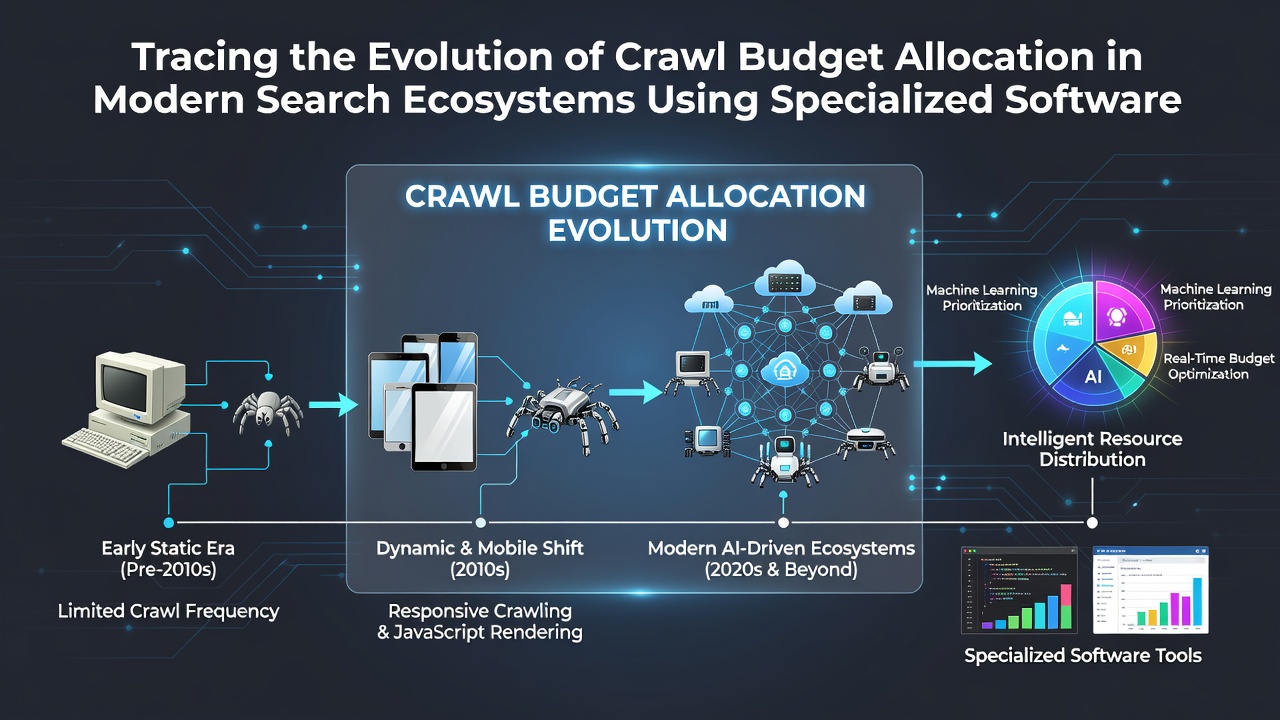
Search engines have managed crawl budgets since the earliest days of the web, and specialized software has tracked these processes through successive waves of algorithmic refinement that began in the late 1990s. Researchers at institutions across North America and Europe documented how initial crawler behaviors relied on simple queue systems that treated every URL with equal priority, yet the introduction of priority scoring in the early 2000s shifted allocation patterns toward pages with higher perceived authority and freshness signals.
Early Mechanisms of Crawl Budget Distribution
Engineers at major search providers developed internal metrics to limit server load while maximizing index coverage, and these metrics evolved into what practitioners now call crawl budget. Data from academic studies conducted at universities in Australia and Canada reveal that early allocation formulas factored in server response times and link equity, while specialized monitoring scripts written by webmasters attempted to surface under-crawled sections of large sites. Those scripts often logged server logs manually, and the process remained labor-intensive until commercial platforms began aggregating the same signals at scale.
Integration of Dedicated Crawl Analysis Platforms
Commercial software suites entered the market around 2010, and they combined log file analysis with API connections to search console data. Observers note that tools such as Screaming Frog and custom enterprise dashboards allowed teams to simulate crawler behavior before deployment, and this simulation reduced wasted requests on low-value URLs. Figures from industry reports published by European digital economy groups indicate that sites using these platforms saw measurable increases in indexed pages within the same crawl quota, particularly after updates that incorporated JavaScript rendering into the allocation model.
But here's the thing: the shift from static HTML to dynamic content forced another round of adaptation, and software vendors responded by embedding rendering engines directly into their crawl simulators. Researchers discovered that pages requiring significant client-side processing consumed disproportionate portions of the budget, and visualization modules within these tools began highlighting render-blocking resources that delayed indexing.
Current Capabilities in September 2026
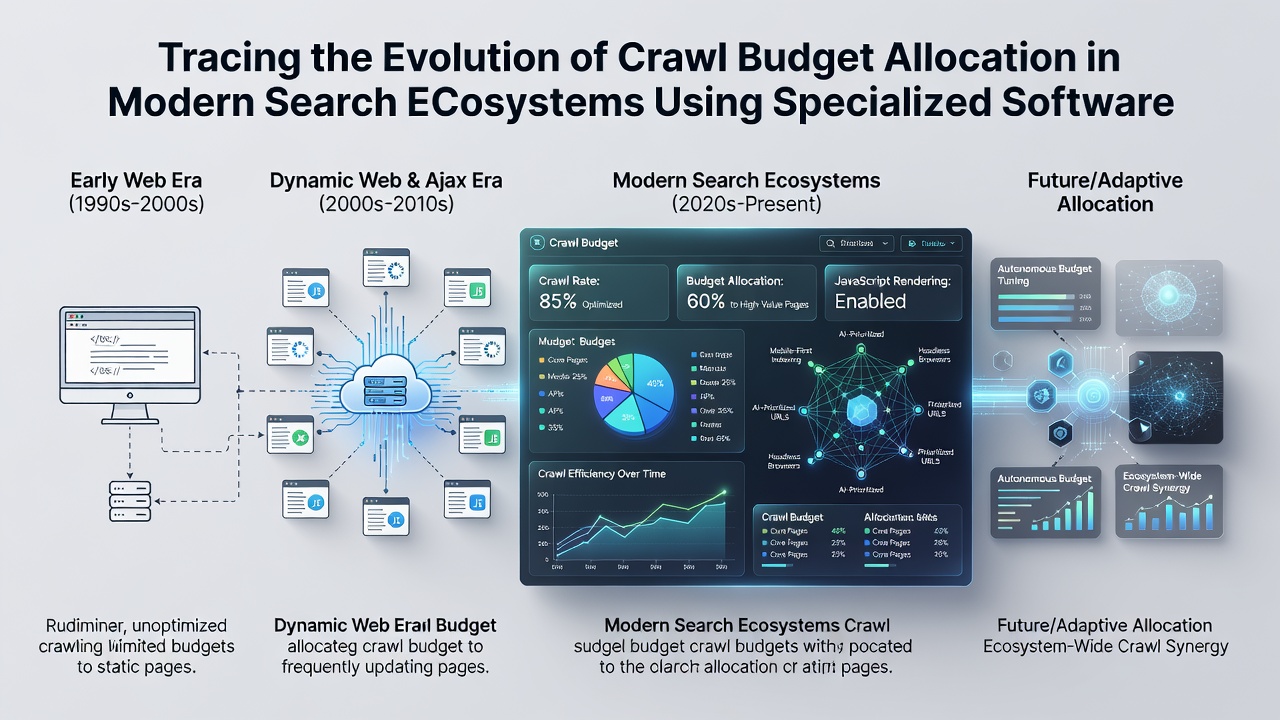
By September 2026, leading platforms incorporate machine learning classifiers that predict crawl demand based on historical patterns and content change velocity. Those classifiers adjust priorities in near real time, and integration with cloud logging services supplies granular breakdowns of request outcomes across geographic data centers. Government-backed digital infrastructure studies from agencies in the European Union and Canada have tracked adoption rates of these predictive modules, showing that enterprise sites reduced redundant crawl requests by measurable margins after implementation.
What's interesting is how API endpoints now expose allocation forecasts directly to site owners, allowing automated rule sets to deprioritize duplicate content or thin parameter-driven pages. One study revealed that organizations using these forecast features maintained higher index coverage during seasonal traffic spikes, while competitors relying on manual adjustments experienced temporary drops. Specialized software also surfaces discrepancies between declared sitemaps and actual crawler activity, and these alerts often prompt immediate structural fixes that preserve budget for primary content sections.
Regional Variations in Tool Deployment
Deployment patterns differ by market, and reports from regulatory bodies in Australia highlight faster uptake among media and e-commerce verticals where content updates occur hourly. In contrast, academic analyses from institutions in the United Kingdom note slower integration within public sector domains that face stricter data residency requirements. Software vendors have addressed these constraints by offering on-premise deployment options that keep log data within national boundaries while still delivering the same priority scoring algorithms.
External links appear naturally in documentation, for instance when users consult W3C technical notes on crawler etiquette or review Industry Canada digital economy reports that benchmark crawl efficiency across sectors. These references help teams align their configurations with established best practices without duplicating effort.
Future Trajectories Supported by Software Roadmaps
Roadmaps published by major vendors point toward deeper integration with edge computing environments, where crawl decisions could execute closer to content origin servers. Observers note that such proximity would shorten feedback loops between content changes and indexing events, and early prototypes already demonstrate reduced latency in priority recalculation. Data centers operated under varying regulatory frameworks continue to supply the raw signals these systems require, ensuring allocation models remain responsive to both technical and policy constraints.
Conclusion
Specialized software has transformed crawl budget allocation from an opaque internal process into a measurable, optimizable component of modern search infrastructure. Historical records, platform documentation, and cross-regional studies together illustrate steady refinement driven by content complexity and regulatory diversity. Those who maintain large sites continue to rely on these evolving tools to align crawler behavior with business priorities while respecting the operational limits imposed by search providers.