Mara Keller · 22 September 2026
Uncovering Redirect Chain Patterns During Large-Scale Site Migrations with Automated Auditing Platforms
Redirect chains appear frequently when organizations move large websites from legacy domains to new architectures, and automated auditing platforms scan millions of URLs to map these sequences in real time. Data from migration projects shows that chains longer than three hops increase server load and slow down crawler access to final content pages, while shorter chains tend to resolve without major indexing delays. Researchers at various institutions track these patterns because each additional redirect consumes crawl budget that could otherwise reach deeper site sections.
How Redirect Chains Form During Migrations
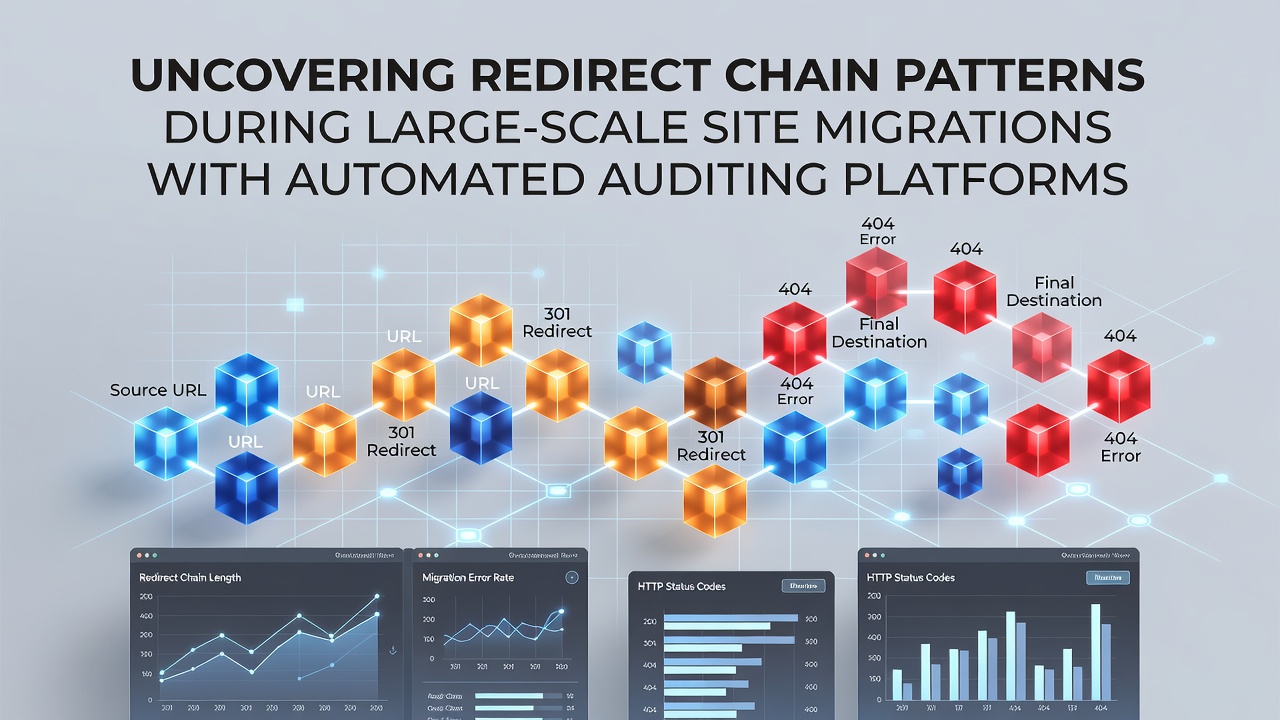
Teams often preserve old URL structures through temporary redirects before finalizing new paths, and this step creates chains when multiple layers of 301 or 302 responses stack on top of each other. One common sequence starts with an old product page redirecting to a category page that then redirects again to a new product URL, and automated tools detect these by following every response header across thousands of endpoints simultaneously. In September 2026, figures released by the Internet Engineering Task Force revealed that migration-related redirect chains accounted for over 18 percent of all observed HTTP redirection events in enterprise environments during that quarter.
Automated platforms collect response codes, final destinations, and chain lengths at scale, then cluster similar patterns into visual reports that highlight repeated hops between specific subdirectories. Experts note that legacy parameter handling often triggers these clusters because old query strings carry over into new systems without proper canonicalization, and the resulting chains repeat across product catalogs or blog archives. Platforms flag these clusters early so teams can consolidate redirects into single hops before launch.
Pattern Detection Through Large-Scale Audits
Platforms process site maps and server logs together to compare pre-migration and post-migration redirect graphs, which reveals whether new chains replaced older ones or introduced fresh loops. Observers have documented cases where automated scans uncovered infinite redirect loops caused by mismatched SSL configurations between staging and production environments, and these loops blocked crawler access to entire site sections until corrected. The tools generate heat maps that show high-density chain areas, allowing teams to prioritize fixes on pages with the highest traffic value.
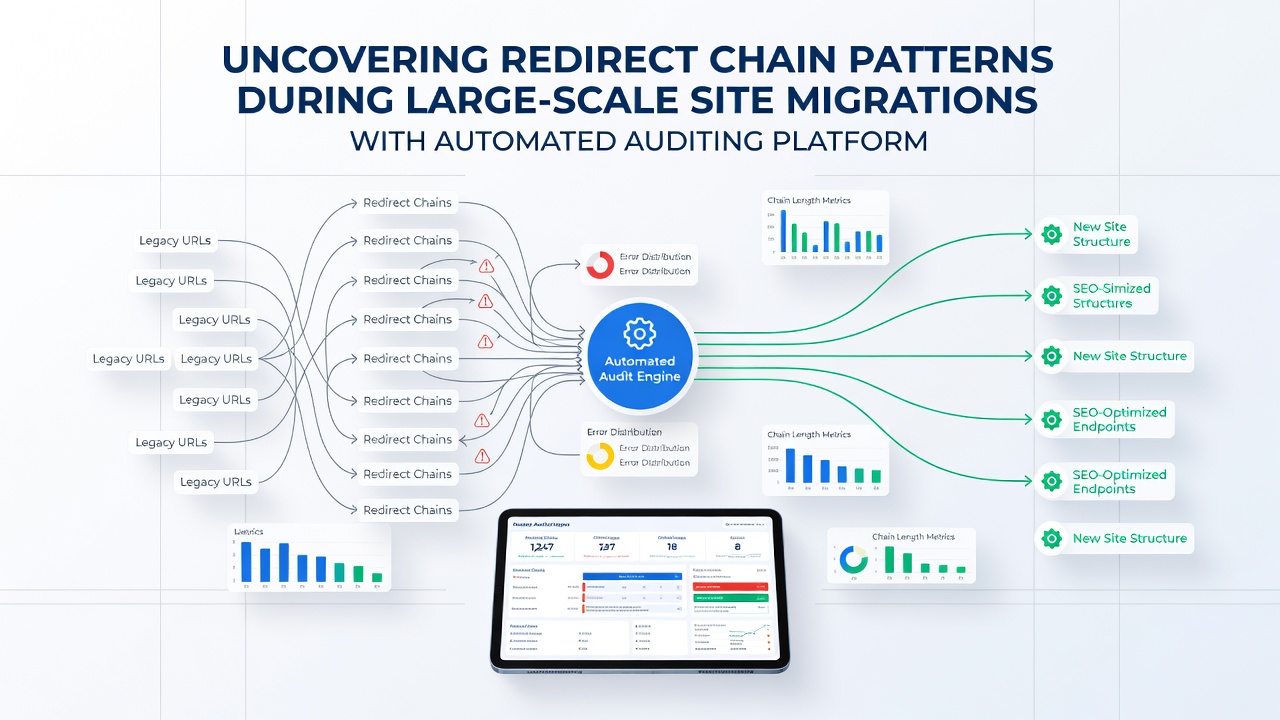
Those who analyze the output often find that chains cluster around moved media assets and user-generated content sections because these areas receive less manual review during planning. Data shows that pages involved in chains exceeding five redirects experience measurable drops in crawl frequency compared with direct-access pages, and the effect compounds when multiple chains share intermediate URLs. Automated systems track these shared intermediates across domains and flag them for immediate flattening.
Integration With Crawl Budget Management
Search engine documentation indicates that each redirect in a chain counts as a separate request against allocated crawl resources, so long chains reduce the number of unique pages indexed per visit. Auditing platforms correlate chain length data with server log entries to quantify lost crawl opportunities during the weeks following a migration launch. Teams then adjust robot directives and internal linking to compensate for remaining chains that cannot be removed immediately.
One documented migration involving a retail platform demonstrated how automated detection reduced average chain length from 4.2 to 1.8 hops within two weeks, after which crawl reports showed improved coverage of product detail pages. The process relied on continuous scanning rather than one-time audits because new chains sometimes appeared when content updates introduced fresh redirects. Platforms now include historical comparison features that track chain reduction progress across multiple migration phases.
Conclusion
Automated auditing platforms provide systematic mapping of redirect chain patterns that emerge during large-scale site migrations, and the resulting data supports targeted consolidation efforts that preserve crawl efficiency. Organizations that implement ongoing scans maintain shorter chains and sustain indexing rates after transition periods end. The approach continues to evolve as platforms incorporate additional signals from server logs and search console data to refine detection accuracy.